How many devices connected to internet in 2026: Trends, IoT growth & security

Current estimates suggest that by 2026, the number of devices connected to the internet will be pushing 30 billion. This isn't just a number to glance over—it's a tidal wave of smartphones, tablets, sensors, and countless other gadgets that are already changing our world. This digital flood is reshaping everything from how your local coffee shop runs to the critical systems in a major hospital.
The Tidal Wave of Connected Devices

To really get a feel for this scale, picture every single person on Earth juggling nearly four connected devices at once. This explosive growth isn't just about more people getting online; it’s about the very fabric of our physical spaces becoming digitised.
For decades, the term "connected devices" mostly brought to mind computers, laptops, and later, smartphones. Today, that category has stretched to include a massive range of technology, all thanks to the Internet of Things (IoT). This is a huge ecosystem that covers everything from smart speakers and thermostats in our homes to complex sensors and machinery in industrial settings. You might be interested to know that as a result of this, the market for indoor location tracking is also projected to see massive growth.
A Tale of Two Device Types
To make sense of this device explosion, it helps to split it into two main categories:
- Consumer Devices: These are the gadgets we all use day-to-day—smartphones, tablets, smartwatches, and TVs. Their numbers keep climbing as we all tend to own multiple devices.
- IoT and M2M Devices: This is where the most dramatic growth is happening. It covers machine-to-machine (M2M) communication, industrial sensors, smart city infrastructure, and even connected vehicles.
This isn't just a matter of convenience. The boom in IoT devices within venues like hospitals and hotels means that what was once a simple guest network now has to support life-saving medical equipment or critical operational systems. They’re all competing for bandwidth and opening up new security risks.
This shift brings both huge opportunities and some serious challenges. For any business or venue operator, knowing how many devices are on the internet is just the first step. The real test is figuring out how to manage, secure, and get value from this new reality. That's exactly what we'll be exploring next.
How We Count Billions of Online Devices
When you hear a figure like nearly 30 billion devices connected to the internet, it's easy to wonder where that number comes from. Is there some giant, global counter ticking away somewhere? The reality is a bit more like detective work.
There's no single, official census for online devices. Instead, leading research firms like Gartner and GSMA Intelligence piece together the global picture. Understanding their methods helps explain why you might see different numbers in different reports and how to use this data for your own planning.
The Analyst's Toolkit
These firms don’t just pull numbers out of thin air. They use a multi-pronged strategy to get a solid estimate of how many devices are actually online. It’s a blend of different data-gathering techniques.
- Tracking Device Shipments: The first step is to look at the source. Analysts monitor how many smartphones, laptops, IoT sensors, and other connected bits of hardware are sold by manufacturers. This gives them a baseline for new devices entering the market.
- Analysing Network Traffic: Internet service providers (ISPs) and mobile carriers have a frontline view of what’s connecting to their networks. Research firms analyse this anonymised data to see trends, measure data use, and count active connections.
- Conducting Market Surveys: To get a handle on ownership and usage, analysts survey both consumers and businesses. This helps them work out how many devices the average person owns, or how many connected endpoints a typical company might have deployed.
This combination of methods results in a highly informed estimate, not an exact count. Think of it like trying to figure out the population of a massive forest. You wouldn't count every single tree. You'd take samples from different areas, look at satellite imagery, and study growth rates to build a reliable model.
By combining data on sales, network activity, and user behaviour, analysts can triangulate a figure that reflects the true scale of global connectivity. This is why you might see one report counting 25 billion devices while another says 27 billion—they are likely using slightly different models or data sources.
Knowing how the sausage is made is crucial. It shows that while the precise number is always a moving target, the underlying trend is undeniable. The number of devices is growing at a breathtaking pace, and having a reliable way to quantify it is the first step in preparing your own network for the impact.
The UK’s Hyper-Connected Reality
Bringing things closer to home, the United Kingdom offers a sharp look into what a hyper-connected nation really means. The number of devices plugged into the internet here has long since overtaken the actual number of people, creating a crowded digital environment that affects every single business and public venue in the country.
This isn't just about everyone having a smartphone anymore. It’s about individuals carrying multiple connected devices—a phone, a laptop, a smartwatch, wireless earbuds—all at once. It’s also about businesses themselves rolling out more connected tools, from stock scanners in a warehouse to vital patient monitors in a hospital. The demand for solid, reliable internet access is relentless.
The Mobile Connection Boom
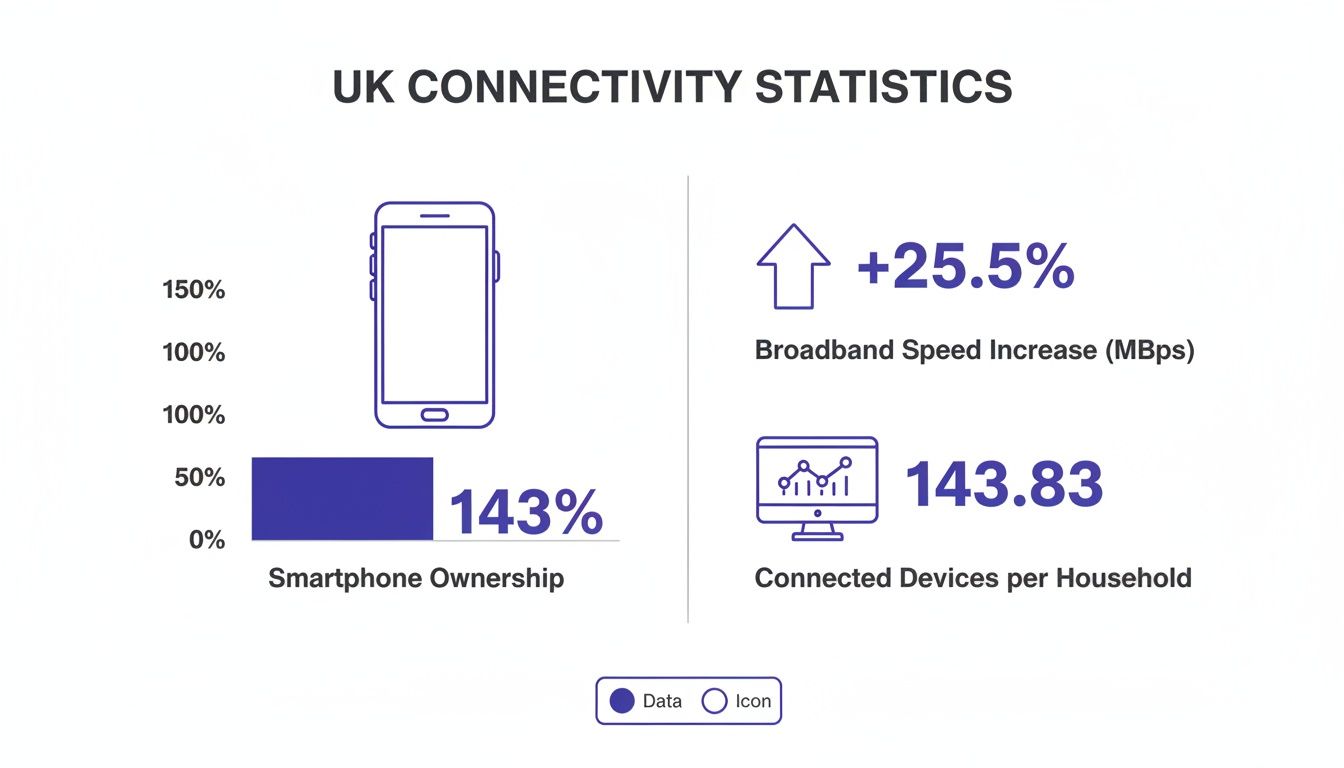
A stark indicator of this density is the sheer volume of mobile connections. As of late 2025, the UK had a staggering 99.3 million cellular mobile connections. That's a figure equivalent to 143% of the entire population. It’s a powerful statistic that shows just how deeply these devices are woven into the fabric of our daily lives.
This number reflects an increase of 1.1 million new connections from the previous year, a trend driven by both consumers and businesses adopting multiple SIMs and devices. You can dig into the full details in DataReportal's comprehensive overview of the UK's digital state.
Fuelling this growth is some seriously robust infrastructure. An impressive 99.5% of these mobile connections are broadband-capable, running on 3G, 4G, or increasingly, 5G networks. This high-speed access is the engine for everything from checking emails to data-heavy video streaming and running countless IoT endpoints.
Faster Speeds Are Raising Expectations
This infrastructure isn’t just widespread; it’s getting dramatically faster. And that directly shapes what your customers, guests, and staff have come to expect from any WiFi network they connect to. When people are used to blistering speeds on their mobile data plan, a slow, clunky connection in your venue becomes instantly obvious and frustrating.
Just look at these growth metrics:
- Median mobile download speeds shot up by a significant 25.5% year-over-year.
- Fixed internet median speeds hit an impressive 143.83 Mbps, a 32.4% jump from the year before.
For any venue operator, this means the performance benchmark is constantly being pushed higher. A guest who enjoys lightning-fast 5G on the street will expect a similarly smooth experience when they log into your hotel, café, or hospital WiFi.
This combination of more devices per person and faster, more capable networks creates a perfect storm for anyone managing IT. That abstract global figure of 'billions of devices' becomes a very real, everyday challenge right here in the UK. Your network must not only handle the sheer volume of connections but also meet ever-increasing demands for speed and reliability.
A Closer Look at the UK's IoT Explosion
When we think of internet-connected devices, our minds usually go straight to the smartphones in our pockets and the laptops on our desks. But there's a much larger, quieter revolution happening in the background that's completely changing the UK's digital makeup. This is the world of the Internet of Things (IoT), and its growth is nothing short of explosive.
This isn't just a tech trend; it's a massive market force. In 2024, the UK's IoT device market was valued at an impressive USD 3,780.45 million. That figure is projected to absolutely skyrocket to USD 17,767.10 million by 2035, fuelled by a steady annual growth rate of 15.11%.
What’s driving this? A relentless demand for high-speed internet to support a booming number of connected devices, with WiFi holding the dominant share of the market. You can dive deeper into the full analysis in this report on the UK's IoT device market.
The numbers paint a clear picture: the UK's appetite for faster, more dependable connectivity is growing right alongside the sheer number of devices we all own and use daily.
To put this growth into perspective, let's look at the projected market value over the next decade.
UK IoT Market Growth Projections (2024-2035)
This table illustrates the projected growth of the UK's Internet of Things (IoT) device market, highlighting the rapid expansion expected over the next decade.
As the data shows, the market is set to more than double in value by 2030 and nearly quintuple by 2035, underscoring the incredible pace of IoT adoption across the country.
The Connectivity Fuelling the Boom
This explosion of devices isn't happening in a vacuum. It's being powered by major investments in the UK's connectivity infrastructure. While WiFi is still the go-to for most homes and many businesses, other technologies are emerging to fill specific gaps.
Take BT's multi-million-pound investment in its Narrowband-IoT (NB-IoT) network in February 2024. Rolled out across EE's existing 4G network, it now covers an incredible 97% of the outdoor population. This tech is designed specifically for low-power IoT devices that don't need a lot of bandwidth but must have a reliable, long-range signal.
This kind of investment is a game-changer for smart cities and industrial use cases. It makes it possible to deploy thousands of low-cost sensors for everything from monitoring air quality and traffic to managing agricultural resources, all without draining batteries or clogging up traditional networks.
Where Is the Growth Happening?
The IoT boom isn't spread evenly across the country. Urban areas are clearly in the lead with an 83% IoT penetration rate, compared to just 56% in rural locations, which shines a light on the ongoing digital divide. Despite this, we're seeing intense growth in several key sectors across the board.
Here are the key areas to watch:
- Smart Homes: Devices like Hive are becoming standard, with an estimated 32% of UK households now equipped with WiFi 6 to handle their ever-growing collection of gadgets.
- Smart Cities: Local councils are deploying sensors for smarter street lighting, more efficient waste collection, and real-time public transport tracking.
- Connected Healthcare: Hospitals are using IoT for everything from remote patient monitoring to tracking the location of vital medical equipment.
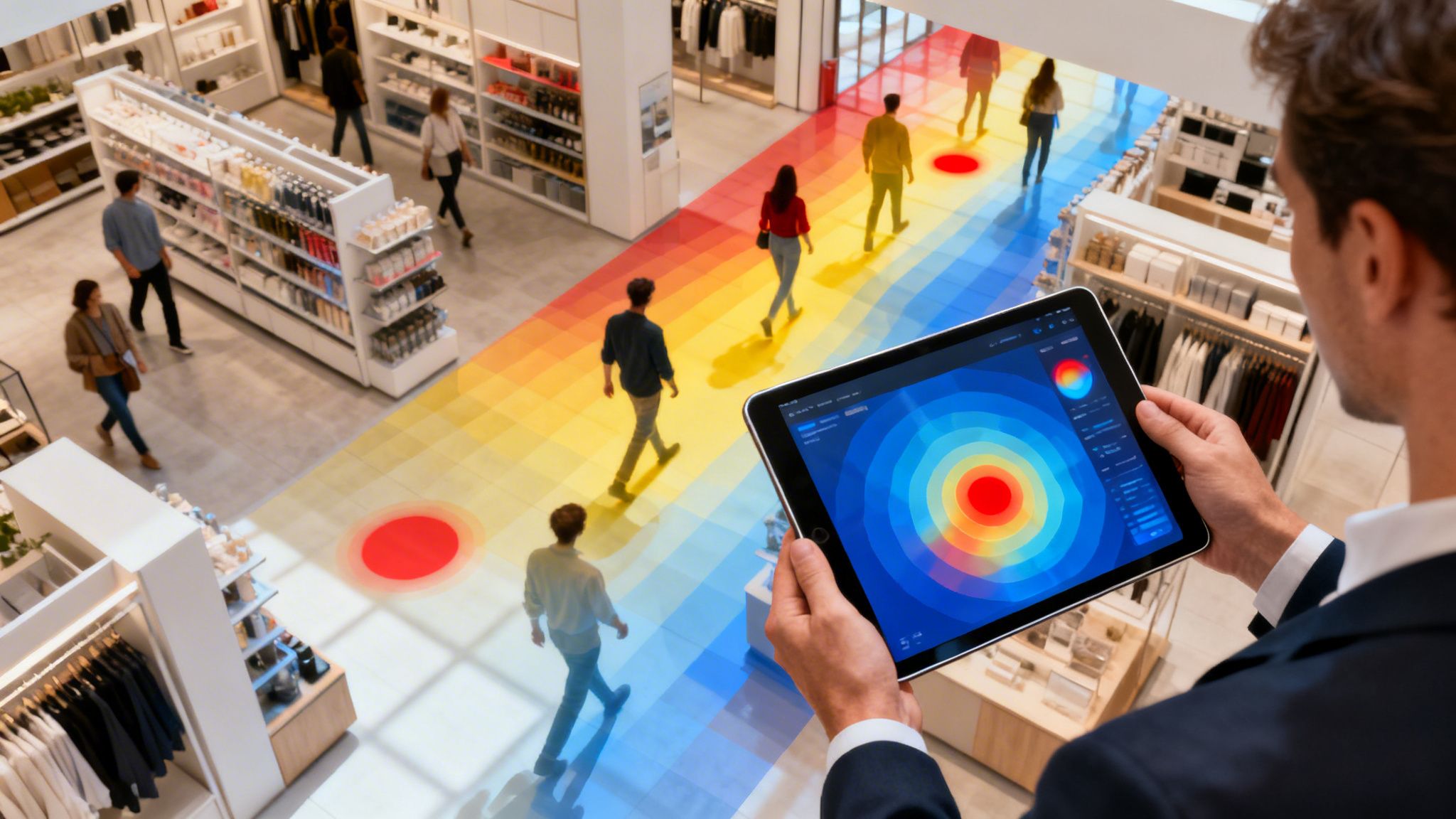
- Intelligent Retail: Shops are using sensors to manage stock, analyse customer footfall, and create more personalised in-store experiences.
- Industrial IoT: In factories and warehouses, an impressive 62% of new installations now use 5G and advanced WiFi for automation and predictive maintenance.
For IT administrators and venue managers, these aren't just abstract statistics. They translate into a real-world increase in the number and type of devices trying to connect to their networks every single day. This influx has direct consequences, ramping up the need for solid capacity planning, tighter security, and much better visibility to manage just how many devices are connected to the internet in their specific environments.
The Real-World Problems of Device Overload

Those billions of devices aren't just an abstract statistic. For businesses and venue operators, they represent a very real, everyday headache. When this digital flood hits your network, it creates a perfect storm of practical problems that IT teams are forced to tackle daily.
Think about a hotel during peak check-in. The guest WiFi slows to a crawl as hundreds of smartphones, laptops, and tablets all fight for bandwidth. Suddenly, you’re drowning in complaints and watching negative reviews pile up, all because the network simply can’t keep up. This is network strain in action—the most immediate and frustrating consequence of device overload.
The Widening Security Gaps
But performance is only part of the story. Every new device connecting to your network is a potential doorway for security threats. Most businesses today are juggling a mix of corporate-owned devices, employees' personal phones (BYOD), and a fast-growing army of IoT gadgets like smart locks, thermostats, and inventory scanners.
This chaotic mix creates a huge and often unmonitored attack surface. A single, insecure IoT device can become the weak link an attacker uses to infiltrate the entire network. The sheer volume of these gadgets, especially from the world of IoT, introduces serious vulnerabilities and highlights the need to understand the associated IoT Security Challenges.
Every unmanaged device on your network is a blind spot. In a hospital, this could be an unauthorised personal tablet connecting to the same network as critical patient monitors. In retail, it could be a misconfigured point-of-sale terminal.
The Crisis of Visibility
This brings us to the third core challenge: a profound lack of visibility. If you can't easily see who and what is on your network, you can’t effectively manage or secure it. Old-school networks that use a single shared password for everyone offer no way to tell the difference between a trusted corporate laptop and a guest’s potentially compromised phone.
This lack of insight creates risky scenarios every day:
- A hospital is unable to quickly locate a specific infusion pump among hundreds of connected medical devices.
- A retail chain has no way of knowing how many shoppers are using the in-store WiFi versus staff members.
- A large office building cannot segment network access for different tenants, creating shared security risks for everyone.
Without clear visibility, IT teams are flying blind. To learn how modern platforms can help, you can explore more about data and security best practices. Dealing with these three problems—capacity, security, and visibility—is no longer just a good idea; it's essential for survival.
How to Tame the Device Deluge
Trying to manage this constant flood of devices with old-school methods just doesn't work anymore. Forget about those clunky captive portals that only frustrate users, and please, stop handing out shared WiFi passwords that offer you zero control and even less security. The real solution is to stop focusing on the device and start focusing on the person using it.
This is the core idea behind identity-based networking. It gives you a solid framework for managing exactly who and what is connecting to your network. It’s how you can finally turn the chaos of countless devices into a secure, well-managed, and seamless experience for absolutely everyone.
The Power of Passwordless Access
Picture a guest arriving at your hotel. Instead of having to ask for a password at the front desk and awkwardly type it in, their phone just connects to the WiFi automatically and securely. This isn’t some future tech; it's what technologies like Passpoint and OpenRoaming do right now.
These systems let a device authenticate one time, and from then on, it connects seamlessly and securely every time it returns. It even works when that same person visits other venues in the network. This provides an incredible user experience while encrypting the connection from the very first data packet, giving security a massive boost.
By verifying a user's identity through their credentials (like an email or phone number), you eliminate anonymous traffic and gain clear visibility. This allows you to differentiate a guest from a staff member or a trusted corporate laptop from an unknown IoT device.
For your staff and their corporate devices, this model gets even better, allowing you to create a zero-trust security environment. By integrating with identity providers like Google Workspace or Entra ID, network access is granted based on verified user credentials, not just a password shared on a Post-it note. If an employee leaves the company, their access is instantly revoked across the board, plugging a huge, and very common, security hole.
From Chaos to Control and Insight
When you adopt an identity-based approach, you’re not just coping; you’re taking control. It directly solves the three main headaches of device overload: capacity, security, and visibility. You get fine-grained control to segment traffic, prioritise critical devices, and make sure everyone has a great connection.
Here are the key benefits of moving to this modern approach:
- Enhanced Security: Switching to a zero-trust model dramatically shrinks your network’s attack surface by ensuring every single connection is properly authenticated and authorised.
- Improved User Experience: Your guests and staff get to enjoy frictionless, passwordless access that just works. It’s a small thing that makes a big difference in satisfaction and loyalty.
- Actionable Visibility: You finally get a clear picture of who is on your network, what devices they’re using, and how they behave. This is invaluable data for making smarter business decisions.
This strategy isn't just about managing connections; it’s about turning your network into a real asset. For anyone planning a new deployment, our guide on how to properly design a network for your venue is a great place to find more valuable insights.
Frequently Asked Questions
Thinking about how to handle all these devices in your own space? Let's tackle some of the common questions we hear from venue operators and IT teams.
How Do I Estimate How Many Devices My WiFi Needs to Support?
A good starting point is to look at your venue's maximum capacity, whether that's seats, rooms, or a fire code limit. As a solid rule of thumb, you should plan for 2 to 3 devices per person.
For a more precise number, you really need to look at your own data. Modern WiFi analytics can show you peak device counts and historical usage patterns. This moves you from guesswork to data-driven capacity planning, showing you exactly how many unique connections you had, for how long, and during which hours.
What Is the Biggest Security Risk from So Many Devices?
The biggest risk, put simply, is the unknown. Every unidentified and unauthenticated device on your network is a potential weak spot. This is especially true for insecure IoT gadgets, which can become easy entry points for attackers. On top of that, using shared WiFi passwords for guests or even staff creates a huge, shared vulnerability.
The most effective defence is an identity-based system that forces every single device to authenticate securely. This approach creates a zero-trust model, which dramatically shrinks your network's attack surface.
Is It Hard to Switch to an Identity-Based System?
Not at all. Modern identity platforms are built for quick, cloud-based deployment. They’re designed to integrate with the leading network hardware you probably already have in place.
A good provider will walk you through the entire process. You can often get a new system up and running in a matter of weeks, not months. The one-time setup effort is well worth the long-term security and insight you gain.
Ready to turn device chaos into a secure, managed network experience? See how Purple delivers identity-based WiFi that delights users and provides actionable insights. Get started with Purple today.